|
BASIC BRIDGE STRUCTURES
An introduction to bridging structures, and investigation of weight limitations.
| MATERIALS REQUIRED PER STUDENT GROUP |
| 56 Squares |
20 Square Frames |
|
| 25 Triangles |
15 Triangle Frames |
130 Connectors |
EXERCISE 1 - BOX GIRDER BRIDGES - SQUARE GIRDER
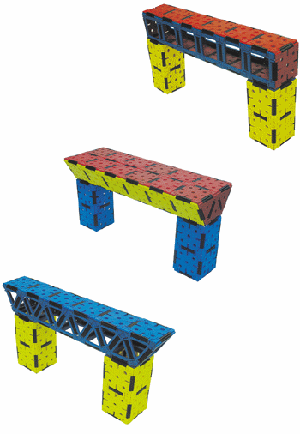 Create a short box girder bridge using 8 squares and 2 square frames for each of the towers, and 17 squares and 5 square frames for the girder. Create a short box girder bridge using 8 squares and 2 square frames for each of the towers, and 17 squares and 5 square frames for the girder.
Sit the girder on top of the towers. Find out how much weight it can support, by placing a weight on the bridge, and then increasing the weight. For each weight start by placing the weight towards one end of the bridge (near the tower) and then in steps move the weight towards the center.
Now make the bridge longer by adding 6 squares and 2 square frames to the girder, and again experiment with the weights.
Now build a girder using triangles, and compare the strength again. Identify which design is stronger, and explain why.
EXERCISE 2 - BOX GIRDER BRIDGES - TRUNCATED TRIANGULAR GIRDER
Using the same towers from Exercise 1, and now create a bridge girder using 3 triangles at each end (one inverted), 10 squares for the top surface, 5 squares for each of the cut away angled sides, and 5 square frames for the girder underside.
Again find out how much weight it can support, by placing a weight on the bridge, and then increasing the weight. For each weight again start near the tower and then work towards the center in steps.
For the double width girder, ensure the weight sits across the full width so there is no concentration of weight down the centerline of the girder.
From your weight testing, establish which bridge is stronger, and explain what factors would contribute to its added strength. Is the extra width of the top a factor? Is the different shape of the girder a factor?
[Klikko Math] [Klikko Science]
[Product Information] [Product Comments] [Enquiries & Ordering] [Home]
|